 Ahsan Ali
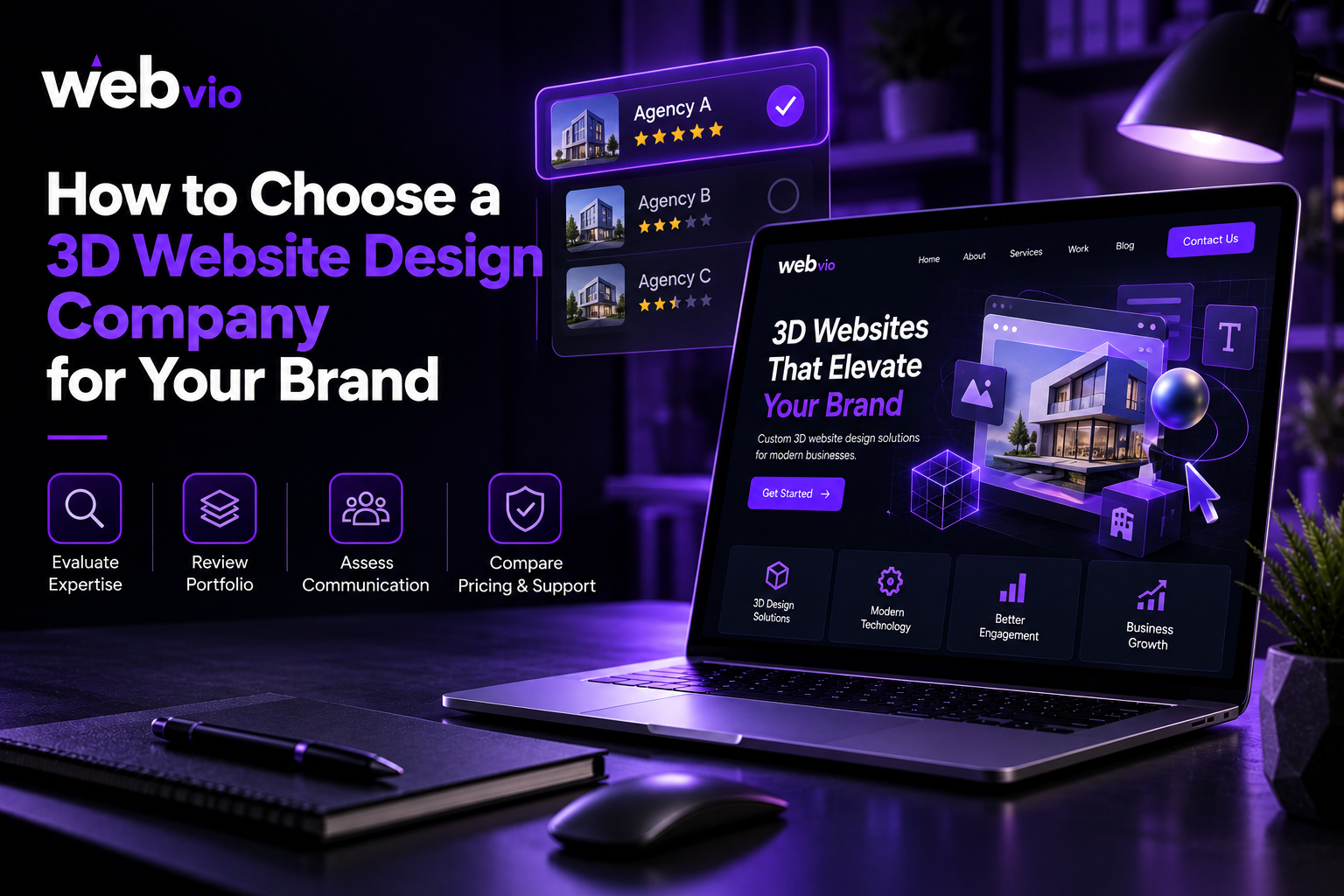
How to Choose a 3D Website Design Company for Your Brand
A website is often one of the first places potential customers encounter your business. In competitive markets, a distinctive digital experience can help communicate your brand’s personality, demonstrate your products, and make complex ideas easier to understand. Three-dimensional visuals and interactive website elements offer new ways to create that experience.
However, choosing a 3D website design partner involves more than finding an agency with an impressive portfolio. The right company needs to understand your business goals, user expectations, technical requirements, and budget. It should also know how to balance creative design with website speed, accessibility, search engine optimization, and long-term maintenance.
Whether you are launching a new website or upgrading an existing one, selecting the right partner can help you avoid unnecessary costs and build an experience that delivers practical value.
What Does a 3D Website Design Company Do?
A 3D website design company plans and develops digital experiences that use three-dimensional graphics, interactive models, animations, or immersive visual elements. Depending on the project, these features may appear throughout a website or within selected sections.
Common services can include:
- Interactive 3D product visualizations
- Animated website elements and transitions
- Three-dimensional brand illustrations
- Interactive product configurators
- Immersive landing pages
- Web-based 3D environments
- Performance optimization for 3D assets
- Integration with existing websites and content systems
Not every project requires a fully immersive website. A company selling physical products might benefit from a model that visitors can rotate, while a creative brand may need a distinctive animated homepage.
The best solution depends on what your audience needs to understand or accomplish. Before contacting agencies, identify the purpose of the experience and the results you want it to support.
1. Define Your Business Goals Before Choosing an Agency
Start by deciding why your business needs 3D website design. A clear objective makes it easier to compare agencies and determine whether their proposed solutions are appropriate.
For example, an e-commerce business may want customers to examine products from different angles. A technology company might use 3D animation to explain how a complex platform works. An architecture firm may want to help prospective clients explore a building concept before construction begins.
Your objectives could include:
- Making products easier to understand
- Creating a distinctive brand experience
- Supporting product comparisons
- Improving the presentation of complex services
- Increasing qualified inquiries
- Helping customers make informed purchasing decisions
Once you identify your main objective, decide how you will measure success. Depending on the project, useful measures may include product interactions, completed configurations, qualified leads, conversion rates, or user feedback.
Clear goals help prevent unnecessary features from consuming your budget. They also give potential agencies a practical framework for developing their proposals.
2. Evaluate the Company’s Portfolio and Relevant Experience
A portfolio is one of the most useful ways to assess a potential design partner. However, do not evaluate projects only by how impressive they look in screenshots or promotional videos.
Whenever possible, explore the live websites and test their interactive elements. Check whether the experience works smoothly, whether navigation remains clear, and whether important information is easy to find.
Look for examples relevant to your business requirements. If you need an interactive product model, prioritize agencies that have built similar experiences. If your project involves immersive storytelling, look for evidence of expertise in animation, visual sequencing, and interactive design.
Ask potential partners to explain their role in previous projects. Find out which parts they designed, which technologies they used, and how they handled performance or usability challenges.
An agency does not necessarily need experience in your exact industry, but it should demonstrate the skills required to solve your particular problem.
3. Assess Design Quality and Brand Alignment
A successful 3D website should reflect your brand rather than feel like a collection of unrelated visual effects.
Review how an agency approaches typography, colour, spacing, movement, navigation, and visual hierarchy. These elements should work together to communicate your brand’s message and guide visitors toward relevant actions.
Ask how the design process will incorporate your brand guidelines, target audience, and existing marketing materials. If your visual identity needs improvement, clarify whether brand design is included or whether you will need a separate provider.
You should also consider the level of interaction appropriate for your audience. A creative technology company may benefit from a visually adventurous experience, while a professional services firm may need a more restrained design that emphasizes clarity and trust.
The goal is to create a distinctive experience without sacrificing usability. Visual creativity should reinforce the brand’s message, not compete with it.
4. Check the Agency’s Technical Expertise
Three-dimensional website experiences can involve several technologies and development disciplines. Depending on the project, these may include WebGL, Three.js, JavaScript, 3D modelling tools, animation workflows, and optimized model formats.
You do not need to understand every technology in detail, but your development partner should explain why its proposed approach fits your requirements.
Ask questions such as:
- Which technologies will power the 3D experience?
- How will models and textures be optimized?
- Will the experience work across common browsers?
- How will the website behave on mobile devices?
- Can the solution integrate with your existing website?
- Who will maintain the code and assets after launch?
An experienced team should be able to explain technical decisions in plain language. It should also discuss limitations honestly instead of promising that every visual effect will work perfectly on every device.
If you are comparing specialist providers, review their 3D Website Design Services against your actual project requirements, including the complexity of the experience and the level of technical support you need.
5. Prioritize Website Speed and Performance
Website performance is essential when a design includes complex visual assets. Large 3D models, detailed textures, animations, and JavaScript can increase loading times or place additional demands on visitors’ devices.
A visually impressive website may lose its effectiveness if users must wait too long for content or experience unresponsive controls.
Ask the agency how it plans to manage performance. A thoughtful approach may include reducing unnecessary model detail, compressing textures, loading assets only when needed, and simplifying effects on less powerful devices.
The team should also test the website on representative mobile devices, desktop computers, and different network conditions.
Discuss how performance will be measured before launch. Tools such as PageSpeed Insights and browser developer tools can help identify loading and responsiveness issues.
Avoid relying on promises of perfect scores. Performance depends on the website’s implementation, hosting, content, third-party scripts, and testing conditions. What matters is a clear optimization process and evidence that the final experience meets agreed requirements.
6. Make Mobile Usability and Accessibility Essential
A 3D experience that works well on a powerful desktop computer may not perform equally well on a smartphone. Touch interactions, smaller screens, limited processing resources, and network conditions can all affect usability.
Ask the agency how it will adapt the experience for mobile users. This could involve simplified models, fewer animations, touch-friendly controls, or alternative visual presentations where complex 3D elements are unnecessary.
Accessibility should also be considered from the beginning. Essential navigation should not depend entirely on interacting with a 3D object. Interactive controls need clear labels, and users should be able to navigate relevant content using a keyboard where applicable.
For motion-heavy experiences, consider reduced-motion preferences and alternatives that communicate essential information without continuous animation.
These measures help ensure that the website remains useful for visitors with different devices, preferences, and abilities.
7. Understand the Agency’s SEO Approach
A visually impressive website still needs a strong foundation for organic search visibility. Three-dimensional elements do not automatically improve search rankings, and complex implementations can create problems if important content becomes difficult to access or pages load slowly.
Ask the agency how it will support technical SEO during development.
Important considerations include:
- Crawlable page content and internal links
- Editable meta titles and descriptions
- Clear heading structures
- Search-friendly URLs
- Mobile usability
- Appropriate indexing and canonical settings
- XML sitemap configuration
- Performance monitoring
- Structured data where relevant
Essential information about your products or services should be available as meaningful text rather than existing only inside an animation or visual model.
Your content strategy also matters. Relevant landing pages, helpful articles, clear service descriptions, and useful calls to action help communicate your offering to visitors and search engines.
If organic search is an important acquisition channel, clarify whether SEO implementation is included in the proposal or requires a separate service.
8. Compare Project Costs and Deliverables
The cost of a 3D website project depends on the number of pages, modelling complexity, animation requirements, custom functionality, integrations, and testing needs.
A relatively simple interactive visual will generally require less work than a custom product configurator or a detailed virtual environment.
Request an itemized proposal that explains what you will receive. It should distinguish essential deliverables from optional enhancements and identify any recurring expenses.
Clarify whether the price includes discovery, design, 3D asset creation, development, testing, revisions, launch support, and documentation. Ask how additional requests will be handled if the project scope changes.
Also consider future costs, including updating 3D assets, maintaining dependencies, fixing compatibility issues, and making improvements.
The lowest quote may not provide the best overall value. Compare proposals based on technical quality, relevant experience, scope, communication, and the resources required after launch.
9. Check Communication, Ownership, and Ongoing Support
A well-managed project requires clear communication between your business and the design team.
Before signing an agreement, establish who your main contact will be, how progress will be reported, and who approves designs and functionality. Agree on milestones, revision limits, responsibilities, and the process for handling delays.
Ownership terms are equally important. Confirm who will control the website, source code, design files, 3D assets, hosting accounts, and third-party licenses. Understand whether you can transfer the project to another developer if your requirements change.
Ask what support is available after launch. You may need help updating assets, resolving browser compatibility issues, improving performance, or adding new features.
Clear documentation and a practical handover process can make your business less dependent on a single provider.
Questions to Ask Before Hiring a 3D Website Design Company
Before making a final decision, ask each shortlisted agency the same core questions:
- Can you show relevant projects and explain the challenges you solved?
- Which technologies would you recommend for our requirements?
- How will you balance visual quality with loading speed?
- How will the experience adapt to mobile devices?
- What accessibility and SEO considerations are included?
- What exactly is included in the quote?
- Who owns the website, code, and design assets?
- What support and maintenance are available after launch?
Comparing the answers will help you identify providers that understand both the creative and technical sides of the project.
Final Thoughts
Choosing a 3D website design company requires more than selecting the agency with the most impressive visuals. You need a partner that understands your business objectives, has relevant technical expertise, and can deliver an experience that remains accessible, fast, and practical.
Start with a clearly defined project goal, evaluate real portfolio examples, compare proposals carefully, and discuss performance, mobile usability, SEO, ownership, and ongoing support before making a commitment.
The right approach is to invest in the 3D features that genuinely help your audience understand your offering or take meaningful action.
If you are exploring options for a new interactive website or planning a redesign, Webvio Design can be a starting point for reviewing web development solutions that align with your brand and business requirements.
Frequently Asked Questions
What should I look for in a 3D website design company?
Look for relevant portfolio experience, technical expertise, strong design capabilities, performance optimization, mobile usability, accessibility awareness, transparent pricing, and reliable post-launch support.
How much does a 3D website design project cost?
The cost depends on the complexity of the design, custom 3D assets, animations, integrations, number of pages, and development requirements. Request a detailed proposal based on your project scope.
Does 3D website design work on mobile devices?
Yes, but the experience must be optimized for mobile hardware, screen sizes, touch interactions, and network conditions. Some effects may need to be simplified.
Can a 3D website be SEO-friendly?
Yes. A 3D website can support SEO when essential content is accessible, pages are crawlable, metadata is properly configured, and performance and mobile usability are addressed.
How long does it take to develop a 3D website?
Timelines depend on project scope, asset creation, interaction complexity, integrations, revisions, and testing. A clear project plan helps establish realistic milestones.
Do 3D websites require ongoing maintenance?
They can. Updates may be needed for browser compatibility, code dependencies, performance, interactive assets, and new website requirements. The level of maintenance depends on the implementation.