 Ahsan Ali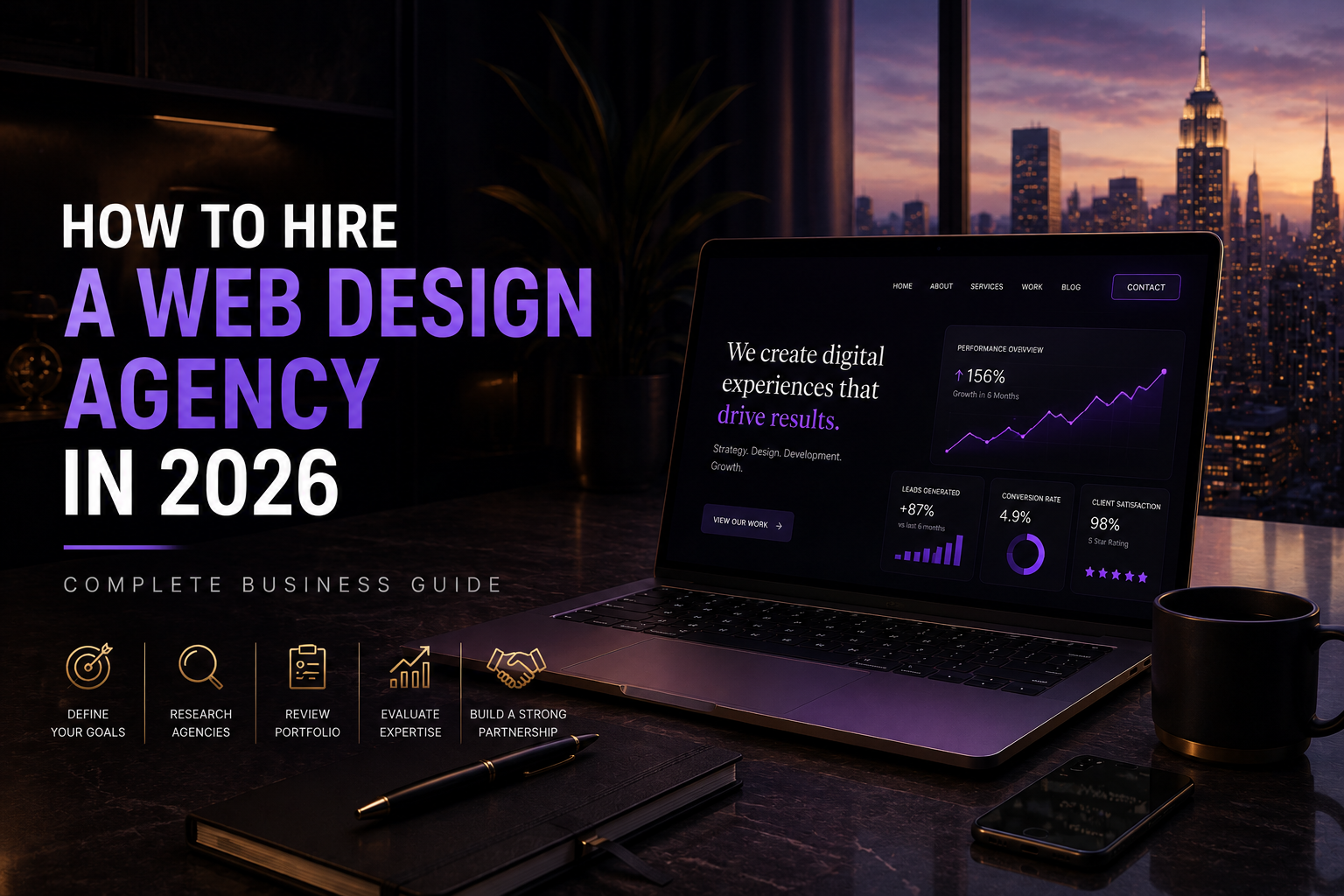
Hiring a web design agency in 2026 is one of the most important decisions a growing business can make — and one of the easiest to get wrong. The wrong agency costs you months of delays, thousands of dollars, and a website that looks fine but generates zero leads. The right one becomes one of your best investments.
This guide walks you through exactly what to look for, what questions to ask, and what red flags to avoid when hiring a web design agency in the US — whether you’re building from scratch, redesigning an existing site, or scaling a growing business.
1. Define Your Website Goals Before You Talk to Anyone
Most businesses make the mistake of contacting agencies before they’ve defined what success actually looks like. Before you request a single proposal, get clear on what you need your website to do.
Are you trying to generate inbound leads from Google? Sell products directly? Book consultations? Build credibility for enterprise clients? Each goal requires a completely different approach to design, structure, and SEO strategy.
Write down your three most important goals before your first agency call. The agencies that ask about these goals upfront — before talking about design — are the ones worth working with. The ones that jump straight to portfolio links are selling aesthetics, not results.
2. How to Evaluate an Agency’s Portfolio Properly
Most businesses look at portfolios and ask “does this look good?” That’s the wrong question. A beautiful website that loads in 6 seconds, ranks for nothing, and converts at 0.5% is a failure regardless of how it looks.
When reviewing portfolios, ask yourself:
- Do these sites load fast? (Open them on your phone and time it)
- Are there clear calls to action on every page?
- Do they look modern or are they 3 years behind current design trends?
- Can you find these clients’ websites ranking on Google?
Ask the agency directly: “What results did this client see after launching?” A confident agency has answers. An agency that only talks about design aesthetics has nothing to show for it.
3. Ask About Performance — Not Just Design
In 2026, Google ranks fast websites higher and punishes slow ones. A site with a poor Core Web Vitals score loses rankings it would otherwise earn. Every agency will tell you their websites are “optimized for speed” — make them prove it.
Ask for a Lighthouse score or PageSpeed Insights result from a recent project. Any professional agency should be targeting scores above 85 on both mobile and desktop. If they can’t show you numbers, they’re not prioritizing performance.
Also ask: do you develop custom or use page builders like Elementor? Page builder sites are inherently slower than custom-coded sites. For a high-performance business website targeting US Google rankings, custom development matters.
4. Understand Their Development Process
A professional agency follows a repeatable, documented process. If they can’t explain their workflow clearly in the first conversation, that’s a red flag.
Here’s what a solid agency process looks like:
- Discovery call — understanding your goals, audience, and competitors
- Strategy & sitemap — planning the page structure before any design begins
- Wireframing — low-fidelity layout approval before design investment
- UI/UX design in Figma — full design sign-off before development starts
- Development — building on approved designs with clean, documented code
- QA & testing — cross-browser, mobile, speed, and form testing
- Launch & handoff — going live with training and documentation
- Post-launch support — at least 30 days of included support
If an agency skips steps 2 or 3, expect expensive revision cycles later.
5. Test Their Communication Before You Sign Anything
Communication quality is the single biggest predictor of whether a project goes smoothly. You can evaluate this before spending a dollar.
Send them an email with a specific question about your project. Note: how long did they take to respond? Was the answer clear and specific or vague and generic? Did they ask follow-up questions or just pitch their services?
The best agencies in the US respond within one business day, ask smart questions, and give you the sense they’ve already been thinking about your problem. If they’re slow or generic before you’re a client, it gets worse after you’ve paid.
6. Ask Specifically About SEO and Lead Generation
A website that doesn’t rank on Google and doesn’t convert visitors into leads is a brochure, not a business asset. In 2026, every professional web design agency serving US businesses should include basic SEO as standard — not as a paid add-on.
At minimum, ask whether they include:
- Proper H1/H2 heading structure
- Meta title and description setup
- Schema markup for local and business SEO
- XML sitemap and robots.txt configuration
- Core Web Vitals optimization
- Mobile-first responsive design
Also ask whether they think about conversion — not just traffic. A page that gets 1,000 visitors but converts at 1% is worse than a page that gets 300 visitors and converts at 8%. The best agencies optimize for both.
7. What Does a Professional Website Actually Cost in the US in 2026?
Website pricing in the US varies enormously based on quality, complexity, and who’s building it. Here’s a realistic breakdown:
| Website Type | Average Cost |
|---|---|
| Basic Business Website | $500 – $2,000 |
| Professional Custom Website | $2,000 – $10,000+ |
| Ecommerce Website | $3,000 – $20,000+ |
| Custom Web Platform | $10,000+ |
One thing to keep in mind: agencies charging under $500 for a business website are almost always using cheap templates, outsourcing to untrained developers, or cutting corners on performance and SEO. You’ll pay more to fix it later than you would have spent doing it right the first time.
A realistic budget for a professional custom website for a US business in 2026 is $2,000–$5,000. Enterprise builds with custom functionality, animations, and CRM integration typically run $8,000–$15,000+.
8. Red Flags That Should End the Conversation
After reviewing dozens of agency proposals, here are the warning signs that reliably predict a bad project outcome:
- They promise a completed website in under 2 weeks for a complex build
- They can’t explain their development process step by step
- Their own website is slow, outdated, or has broken elements
- They use stock portfolio images instead of real client work
- They quote a price without asking about your goals first
- They have no contract, no milestone structure, and no revision policy
Trust your instincts. If something feels off in the sales process, it will feel worse during the project.
9. Check What Support You Get After Launch
A website requires ongoing maintenance after launch — and most businesses don’t realize this until something breaks. Ask every agency you speak to exactly what happens after you go live.
At minimum you should expect:
- At least 14–30 days of free post-launch bug fixing
- A documented handoff with login credentials, hosting details, and CMS training
- Clear pricing for ongoing maintenance if you need it
- A named point of contact — not a generic support inbox
Agencies that disappear after launch are unfortunately common. Ask for their support policy in writing before you sign anything.
10. Choose a Growth Partner, Not a Design Vendor
The best web design agencies in the US in 2026 think like business consultants, not just designers. They ask about your revenue goals, your customers, your competitors, and your current conversion rates. They build websites that work — not just websites that look good in a portfolio screenshot.
Take your time with this decision. Request proposals from at least two agencies, compare their processes (not just their prices), and choose the team that asks the most intelligent questions about your business.
Your website will represent your business 24 hours a day to every potential client who finds you online. It deserves more than the cheapest quote.
Ready to Work With a Web Design Agency That Focuses on Results?
Webvio builds custom websites for US and UK businesses that need more than a pretty design — we build sites that rank, convert, and generate leads from day one. Every project includes custom design, on-page SEO, performance optimization, and 30 days of post-launch support.